AI Research
Breaking the Legacy Trap
How AI changes the economics of modernising Scotland’s public services
Scotland spends heavily on keeping ageing technology running. New evidence suggests AI can fundamentally change the economics of replacing it.
Our latest research examines how AI-first analysis and software engineering can reduce the effort required to modernise legacy systems, shorten payback periods and help shift public-sector technology investment from maintaining the past to building services for the future.
Download the full report (PDF 2mb)
Executive summary
Across Scotland’s public sector, ageing systems continue to perform essential functions every day. But keeping them running comes at an increasing cost.
Scotland’s public sector spends an estimated £1.86 billion a year on ICT. Applying the UK Government benchmark that around half of IT expenditure is consumed by legacy estates suggests that approximately £930 million a year may be spent sustaining legacy technology.
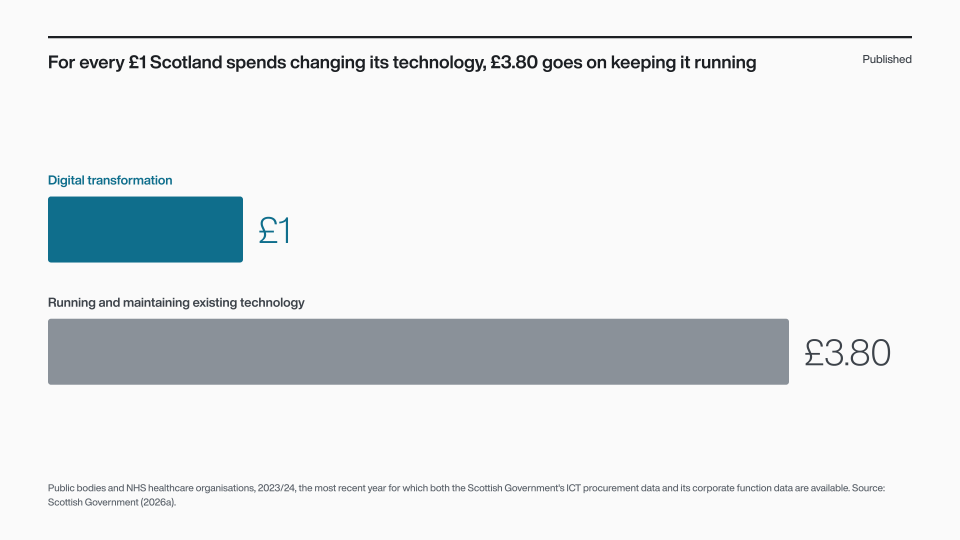
At the same time, Scottish Government data shows that around £3.80 is spent running and improving existing technology for every £1 invested in digital transformation.
For years, deferring replacement has often been rational. Modernising legacy systems can be expensive, technically difficult and risky. The benefits may be clear, but the upfront cost and length of time before an investment pays back can make maintaining the existing system for another year the defensible choice.
AI is changing that calculation.
Storm ID’s measured delivery evidence shows how AI-assisted analysis and software engineering can reduce the effort required to understand existing applications and build their replacements.
The result is potentially significant: systems that previously appeared too expensive to modernise may now have a very different business case.
The economics of legacy technology are changing
Three figures frame the opportunity.
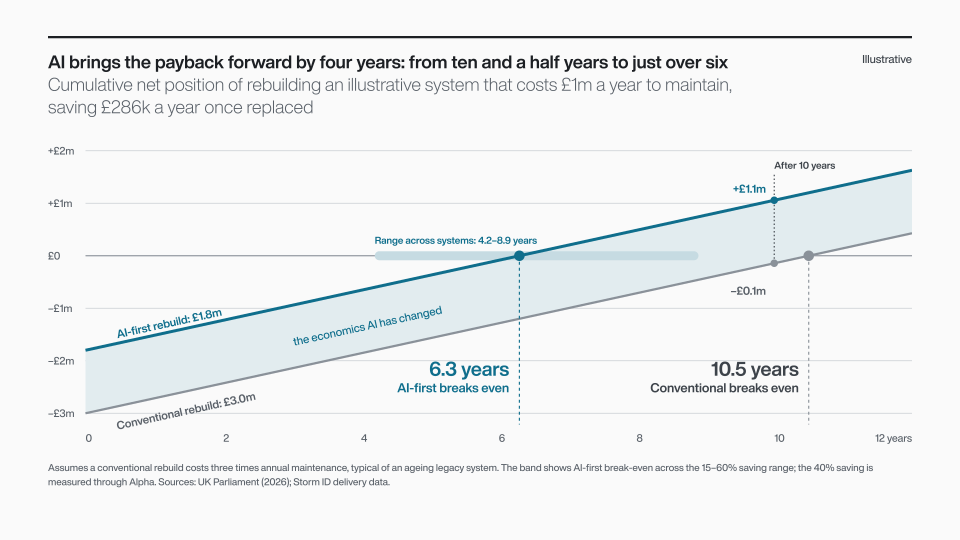
Consider an ageing application costing £1 million a year to maintain.
Based on UK Government evidence, a modern replacement could cost around 28.6% less to run, saving approximately £286,000 a year.
If rebuilding the system conventionally costs £3 million, it would take around 10.5 years for those savings to repay the investment.
If AI-first delivery reduces the rebuild effort by 40%, the cost falls to around £1.8 million and the payback period reduces to approximately 6.3 years.
The annual benefit of modernisation has not changed.
What AI changes is how quickly you can get there.
 Download the full research (PDF 2mb)
What AI changes
Modernising an application that may have evolved over twenty or thirty years starts with understanding what it actually does.
Business rules can be embedded in source code, databases and configuration. Important knowledge may also sit in support tickets, spreadsheets, documentation and the experience of long-serving staff.
AI can accelerate this digital archaeology.
It can help engineers analyse unfamiliar code, identify business rules, map dependencies and generate documentation for review. Validated findings can then feed into specifications, tests, migration activity and the development of replacement software.
On one UK public-sector programme, Storm ID measured a 40% like-for-like reduction in effort using an AI-first delivery approach.
The gains were not evenly distributed.
The last figure matters.
AI can significantly accelerate technical analysis and engineering, but it does not remove the need for experienced people, effective governance or accountable decision-making. In fact, moving faster makes strong testing and assurance even more important.
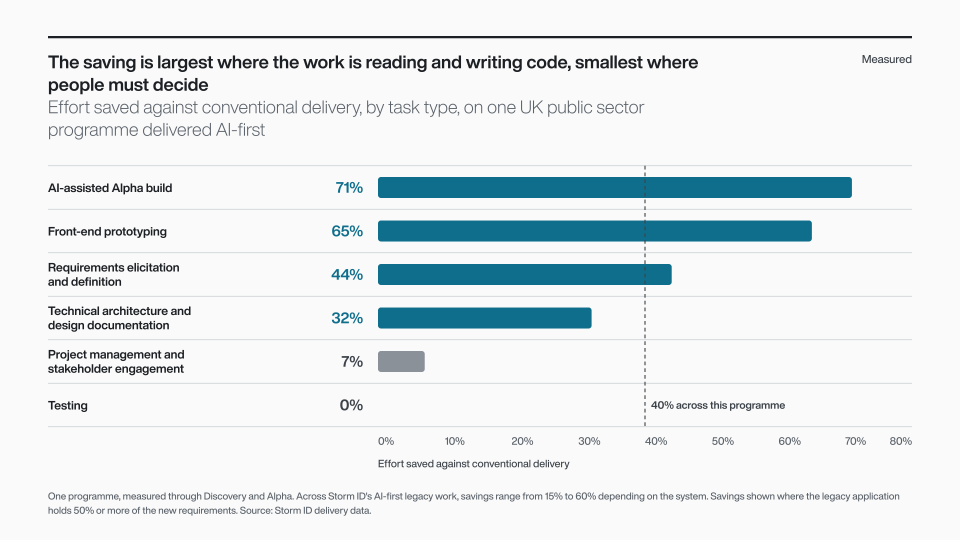
Storm ID’s wider AI-first legacy modernisation experience suggests that savings vary considerably between systems, with an observed range of approximately 15% to 60% depending on factors such as source-code availability, architecture, integrations, data quality, technology and governance requirements.
What could this mean for Scotland?
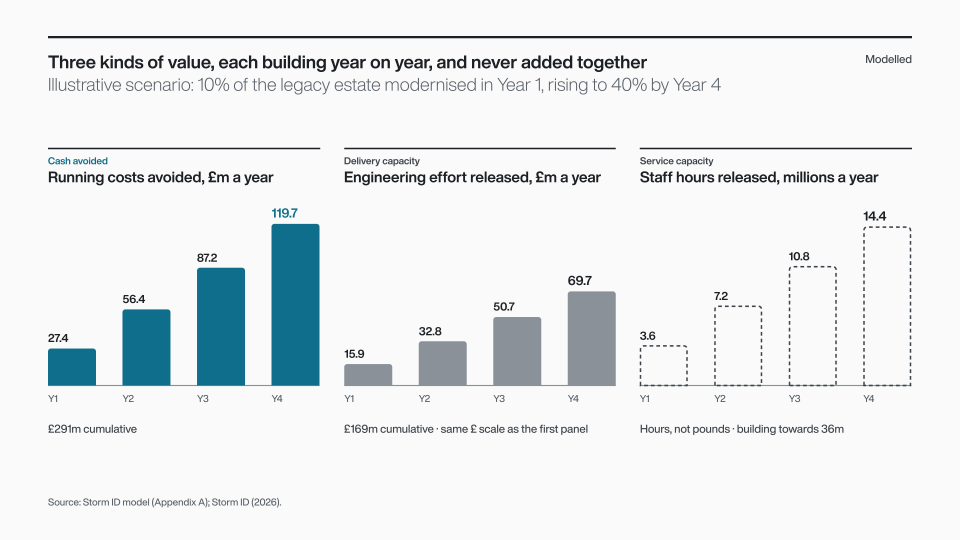
The research models an illustrative four-year scenario in which AI-first modernisation is applied to a growing proportion of Scotland’s legacy estate: from 10% in Year 1 to 40% by Year 4.
It is a scenario, not a forecast, but it illustrates the potential scale of the opportunity.
Three distinct forms of value emerge.
As modern systems replace more expensive legacy technology, annual avoided running costs could rise from approximately £27 million in Year 1 to around £120 million a year by Year 4.
A 40% reduction in delivery effort means the same transformation investment can go further. In the illustrative scenario, approximately £169 million of engineering effort could be released over four years - allowing the same budget to support around two-thirds more modernisation than conventional delivery. This is delivery capacity, rather than a direct cash saving.
Modern technology can also make better automation and service redesign possible. Applying the moderate scenario from Storm ID’s earlier research suggests that around 14.4 million hours of staff capacity a year could be released by Year 4 as more of the estate is modernised.
These are three different forms of value and should not be added together as a single saving.
Taken together, however, they illustrate how modernisation can reduce the burden of maintaining ageing technology while creating capacity to deliver further change and improve public services.
A route out of the legacy trap
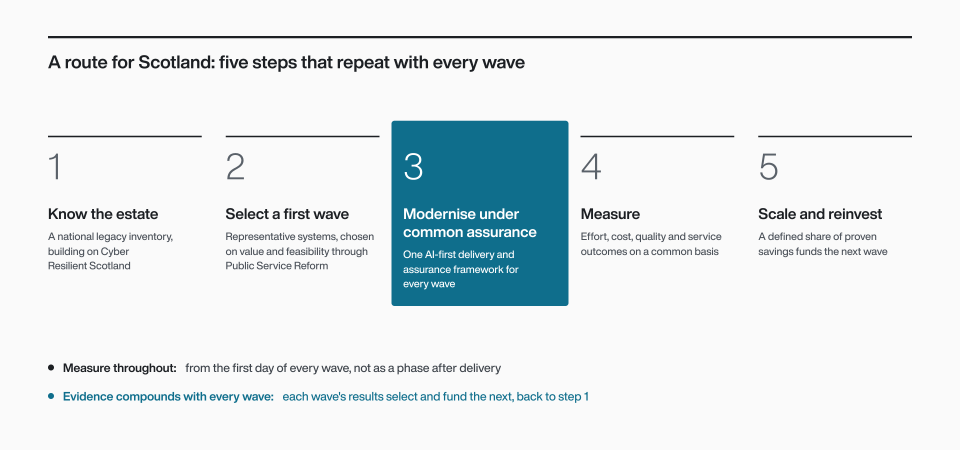
The paper proposes that Scotland starts with a focused first wave of legacy modernisation, measures what happens and uses that evidence to determine how far and how quickly to scale.
- 1Create a Scottish public sector legacy technology inventoryBuild a shared view of legacy systems, their operating costs, risks, dependencies and replacement plans.
- 2Prioritise by value and feasibilityIdentify the strongest candidates for modernisation based on whole-life cost, service outcomes, operational risk and the wider opportunities for public-service reform.
- 3Create a common AI-first delivery and assurance frameworkEstablish consistent standards covering approved tools, information protection, human accountability, security, architecture, testing, accessibility and traceability.
- 4Measure outcomes consistently from the first waveTrack delivery time, effort and quality alongside operating costs, systems retired and outcomes for citizens and staff.
- 5Reinvest demonstrated benefitsWhere modernisation produces verified cashable savings, use an agreed proportion to support subsequent waves of change.
The cost of standing still has changed
Legacy systems have persisted for rational reasons.
Replacing critical technology has traditionally required significant upfront investment, long delivery times and uncertain returns. For many systems, maintaining what already existed was the defensible choice.
AI does not remove the complexity or risk of modernisation.
It changes the arithmetic.
Faster analysis and engineering can bring the benefits of modernisation forward and strengthen the case for changing systems that previously appeared uneconomic to replace.
For a growing share of the public-sector estate, the question may no longer be whether modernisation is affordable, but whether continuing to defer it is now the more expensive choice.
Move Scotland’s technology investment from the cost of standing still to the capacity to keep improving.
Read the full research
Breaking the Legacy Trap: How AI changes the economics of modernising Scotland’s public services
Explore the evidence, financial modelling, methodology and recommendations for creating a more systematic approach to legacy modernisation across Scotland’s public sector.