Legacy system modernisation
Making legacy systems visible, validated and safe to rebuild
Many public services still run on systems that nobody fully understands. Storm ID uses AI to uncover what a legacy system actually does. We check what we find with the people who run the service. Then we rebuild it as a modern service that your organisation can explain, change and trust.

You cannot modernise a service you cannot explain
Legacy systems hold years of policy, workarounds and decisions that were never written down. That logic sits in places that conventional discovery struggles to reach:
- Source code, stored procedures and batch processes
- Spreadsheets and macro-enabled workbooks
- Policy documents, manuals and the knowledge of long-serving staff
- Systems where the original supplier, or the source code, is no longer available
So modernisation keeps getting deferred. The old system costs more to run each year, the people who understand it retire, and the risk grows quietly. Across Scotland’s public sector, around £3.80 goes on running existing technology for every £1 spent on changing it.
This is where AI changes the economics. We use AI to do the slow, expensive work of discovery with far less effort. Every finding then goes to people who know the service before anything is built. You start with evidence, not with a target platform.
As an AI-first consultancy with over two decades of public sector delivery, Storm ID takes you from an opaque legacy system to a live, modern service. Governance and assurance are built in at every stage.
Key benefits

Understanding before commitment
Know what your system really does, which rules matter and what it will cost to change. You learn this before you choose a platform or set a deadline.
Faster, lower-cost delivery
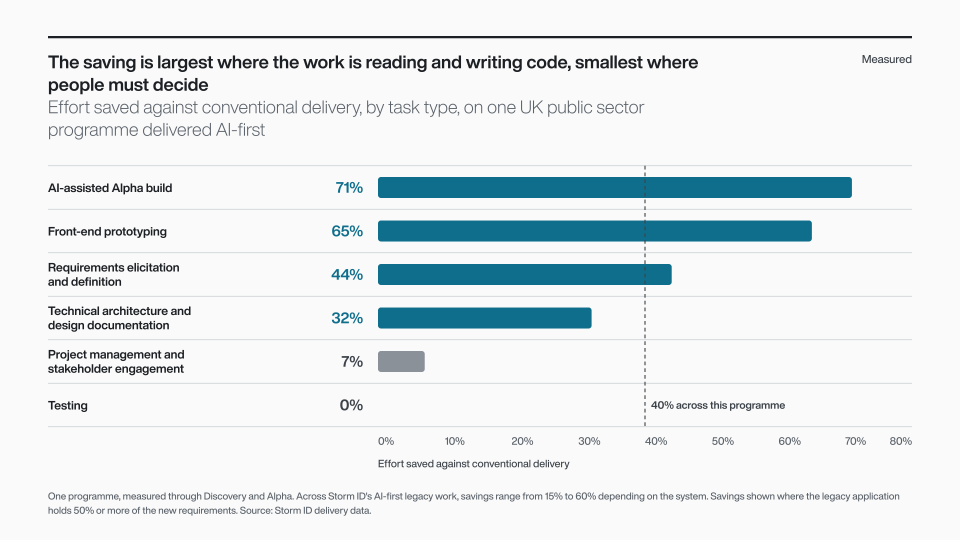
AI cuts the effort of discovery, specification and build. On our own delivery, we have measured around 40% less effort than a conventional approach.
Evidence you can audit
Every finding can be traced to its source. The chain runs from the legacy code or policy to the requirement and the test that replace it.
Modernise the service, not its constraints
We decide what to preserve, improve, retire or introduce. That way you don’t rebuild limits that only existed because of old technology.
Lower operational and cyber risk
Replace fragile, unsupported systems before they fail, and depend less on a shrinking pool of specialist skills.
How it works
- 1DiscoverOur Legacy Discovery Accelerator turns code, data, spreadsheets and documents into an evidence pack.
- 2ValidateYour service owners and specialists confirm, correct or reject each finding.
- 3DecideChoose what to preserve, improve, retire or introduce, one component at a time.
- 4SpecifyTurn the validated rules into testable requirements and acceptance criteria.
- 5ModerniseRebuild using AI-assisted engineering, with peer review and controlled release.
- 6MeasureTrack how the service performs, then reuse the method on the next system.
“AI changes how fast we can modernise. It doesn’t change the standard a public service has to meet before it goes live.”
Where legacy modernisation delivers impact
Central government
Justice
Health and care
Local government and public bodies
Built for trust
- Sensitive material stays under your control, and data is minimised before any analysis
- Analysis runs in approved environments with identity controls, MFA and least-privilege access
- Model providers retain none of your data
- AI output is treated as a draft until people confirm it
- AI is used to build the service, not as something the live service depends on
- Delivered under ISO 27001 and ISO 9001 certified processes
Why now is the time to act
- Standing still keeps getting more expensive. Most legacy budgets go on keeping systems running, not on improving them.
- Specialist knowledge is leaving. The people who understand older systems are retiring faster than they can be replaced.
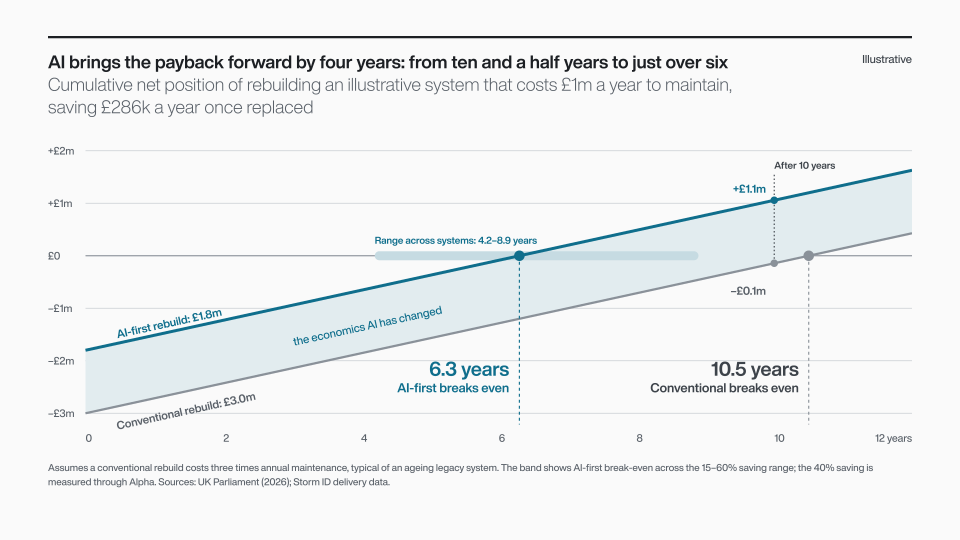
- AI has changed the payback. In our modelling, payback on a legacy system costing £1m a year falls from about 10.5 years to 6.3 years.
- Reform depends on it. Better services and lasting savings need systems that can change.
Storm ID helps you move from deferral to delivery. You start with one system and measure the results before you scale.
Why Storm ID
For over two decades, Storm ID has delivered secure digital services for public sector and regulated organisations. We developed this method on live public sector work. That includes taking a fragile macro-enabled workbook at the FCDO through to a validated specification and a path to a modern digital service.
We combine AI-led discovery with the engineering discipline, governance and assurance that public services demand. We are a Microsoft Solutions Partner for Data & AI and a member of Anthropic’s Claude Partner Network and OpenAI Select Partner, and we hold five ISO certifications.












Start with one system
Modernisation doesn’t have to begin with a programme. It can begin with one service that proves the approach.